

Rise and fall of the German violin making industry
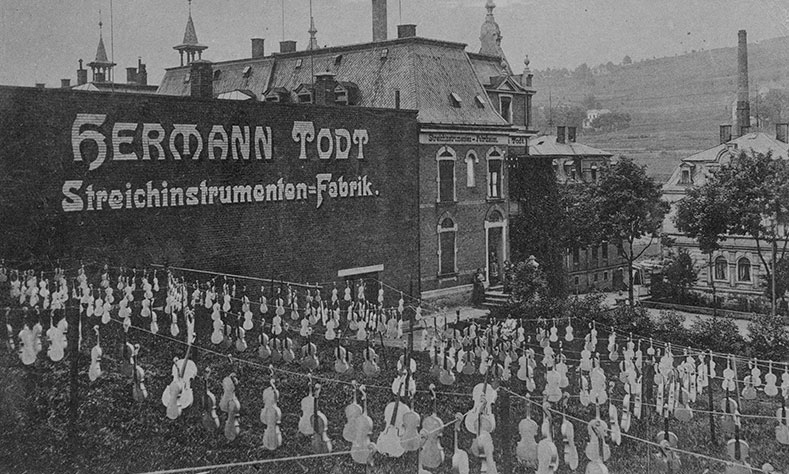
As early as the late 17th century, Bohemian instrument makers in the small towns of Schönbach and Graslitz were forced to relocate to the neighbouring Saxon towns of Klingenthal and Markneukirchen in the wake of the Counter-Reformation. The eventful history of these two areas, known as the ‘music corners’, would shape Central European violin making for several centuries.
The histories of Saxon and West Bohemian violin making are closely intertwined. At the forefront of this shared history are the towns of Markneukirchen (GER), Klingenthal (GER), Schönbach (today Luby CZE) and Graslitz (today Kraslice CZE).
As early as 1677, exiles from the Bohemian towns of Schönbach and Graslitz founded the first violin maker’s guild in Markneukirchen in Saxony. This laid the foundation for the ‘Musikwinkel’ (music corner). Pre-industrial forms of trade developed here as early as the 18th century. Production involving the division of labour and the separation of manufacturing and sales were already widespread.
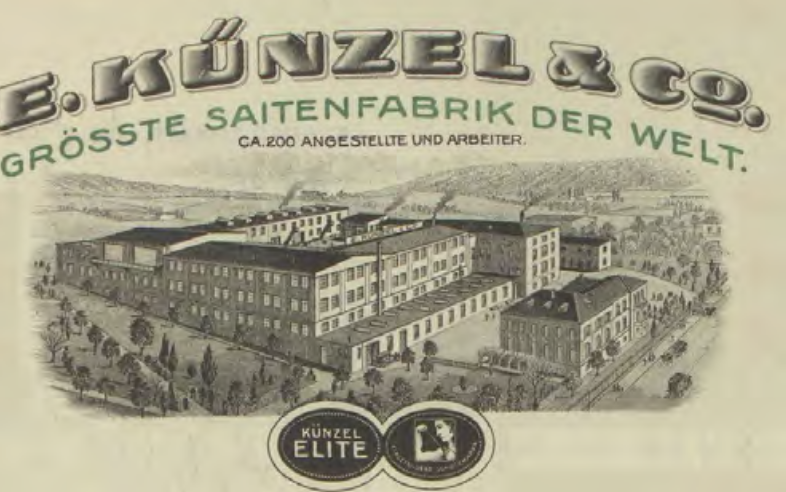
Rib turners, neck carvers and ‘box makers’ performed the preparatory work in the countless factories of the surrounding villages for the composition of instruments in master craftsmen’s workshops. By 1800, around 18,000 violins were being made each year in Markneukirchen in about 80 factories.
At the height of the industrialisation of musical instruments at the beginning of the 20th century, about 20,000 people were employed in about 100 villages. About two-fifths of the world trade in stringed and plucked instruments at the time could be attributed to Vogtland-Bohemian production.
Individual master workshops set themselves apart from the masses with excellent quality standards in artistic violin making.
The consequences of World War II had a lasting effect on the music corner. While the Sudeten German population in the Bohemian villages was expelled from 1945, the businesses in the Vogtland had to struggle with forced collectivisation in the emerging GDR (East Germany). Trade relations were broken up. Despite an exodus of instrument makers to West Germany, it was possible to continue the tradition of violin making in Markneukirchen and Luby. Both towns were considered important centres of Eastern European violin making until 1989.
Since the fall of communism, companies were able to re-establish themselves, partly due to the founding of the University of Applied Sciences for Violin Making.