

Violin making beneath the influence of the French Revolution
Violin making in pre-revolutionary Paris was shaped by the court environment: the viola da gamba and other instruments of the violin family were at the centre of musical cultivation at the Versailles court.
The ‘24 Violons du Roy’ orchestra, founded by Louis XIII in 1624, and later the ‘Chapelle Royale’, set standards for courtly musical culture.
The French Revolution heralded a turning point. The emergence of virtuosity and the beginnings of concert life in large halls, as well as the founding of conservatories for all levels of society, challenged violin makers to come up with new ideas. Old instruments had to be rebuilt, and new instruments designed in such a way that they matched the sound of the modern ones.
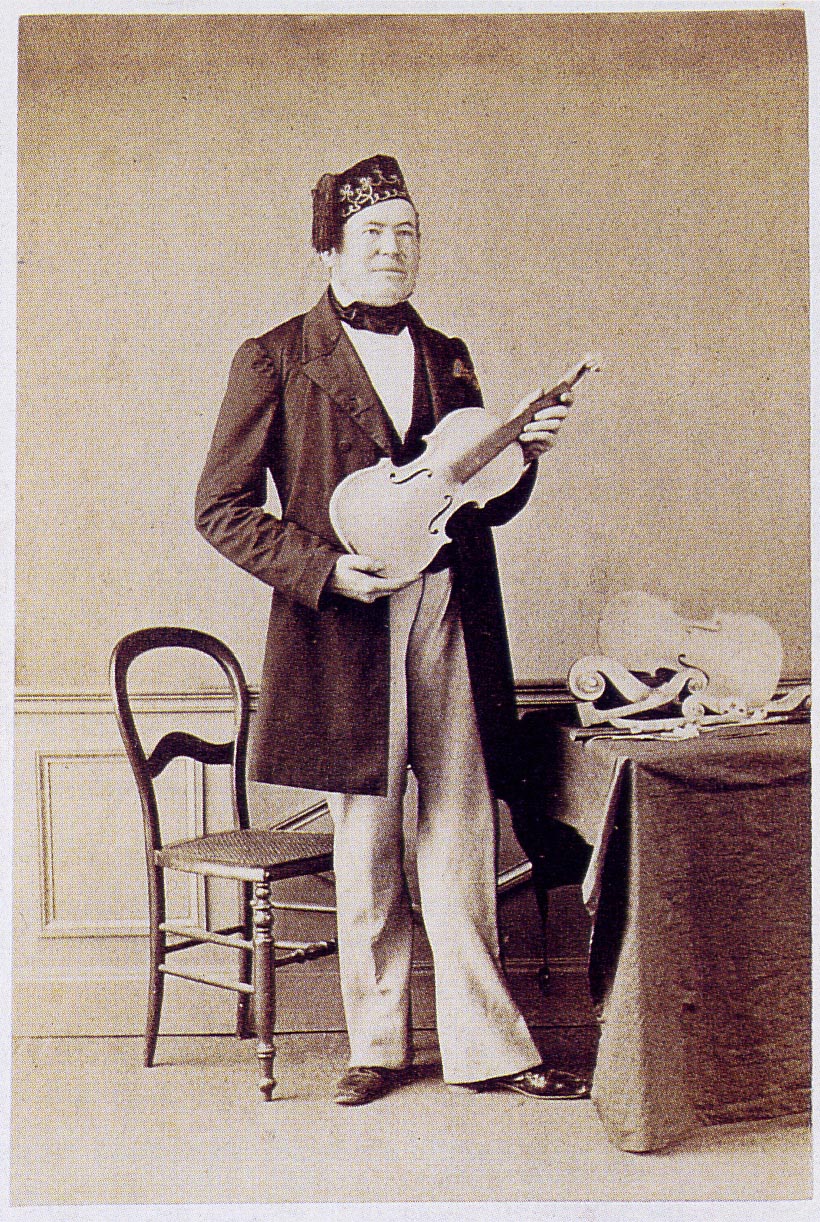
Jean Baptiste Vuillaume (1798-1875) in particular paved the way for the great French epoch of violin making. A meticulous violin maker, ingenious inventor, careful restorer and shrewd businessman, he was a teacher and role model for entire generations of violin makers.
The great epoch of Parisian violin making, from the end of the 18th century to the 20th century, is closely linked to the development of the second French centre of violin making: Mirecourt.