

The materials on display are:
-
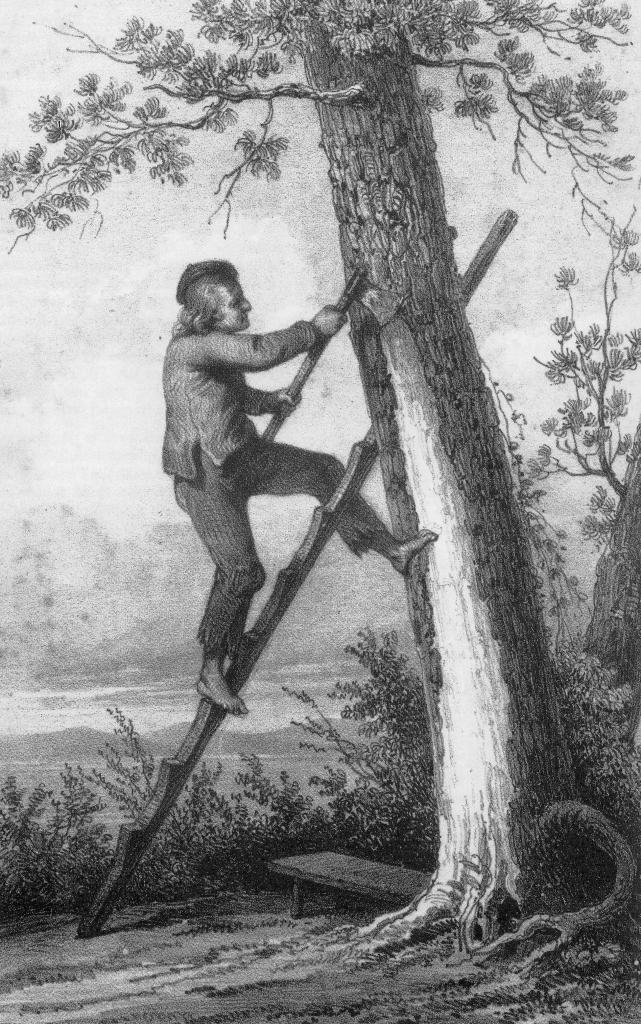
Spruce resin, raw
Sticky, aromatic resin that exudes from injuries in spruce bark. In its raw form it still contains essential oils and solid resin components.
-
Rosin, light
Light-colored, brittle resin obtained by distillation of spruce resin (removal of essential oils). Lighter grades are less oxidized, harder, and give varnishes transparency.
-
Rosin, dark
Like light rosin, but more oxidized or heated longer. Contains more color-giving substances, produces a warmer tone, but can be more brittle and darker.
-
Mastic
Soft, aromatic resin from the mastic tree (Pistacia lentiscus), mainly from the Mediterranean region. Very clear, easily soluble in alcohol and turpentine oil, adds gloss and elasticity.
-
Sandarac
Hard, brittle, pale-yellow resin from the North African sandarac cypress (Tetraclinis articulata). Produces hard, clear varnishes, though somewhat brittle.
-
Dammar
Clear, light resin from various tropical trees (mainly Shorea species). Produces soft, high-gloss, very transparent varnishes.
-
Propolis
Resinous bee glue collected from buds and bark. Contains resins, balsams, and wax; slightly elastic, traditionally seldom used in violin varnishes.
-
Sticklac
Unrefined raw shellac, as obtained from the resinous secretion of the lac insect. Still contains wax and impurities, purified before varnish making.
-
Shellac
Resinous substance derived from the secretions of the lac insect. Easily soluble in alcohol, produces hard, glossy varnishes; the standard resin for spirit varnishes.
-
Strasbourg turpentine
Thick balsam from the silver fir (Abies alba), especially from the Vosges region. Serves as a plasticizer in varnishes, providing elasticity, gloss, and resinous fragrance.
-
Venetian turpentine
Thick larch balsam (Larix decidua), traditionally from the Alps. Very sticky, golden-yellow, adds elasticity and depth to varnish, enhances the flame of the wood grain.
-
Linseed oil
Drying oil from flax seeds. Polymerizes by oxidation in air, forming elastic, water-repellent films. The principal binder in oil varnishes.
-
Walnut oil
Oil from walnuts, dries more slowly than linseed oil but produces lighter, less yellowing varnish films; occasionally used as a binder in oil varnishes.
-
Gum turpentine (spirits of turpentine)
Volatile essential oil obtained by distillation of pine resin. The main solvent for oil varnishes, giving varnish the desired consistency.
-
Spike oil
Essential oil from lavender (Lavandula latifolia), historically used as a solvent and flow improver in varnishes. Slows drying, improves smoothness and elasticity.
-
Alcohol
In varnish making usually ethanol (96% or absolute). Solvent for spirit varnishes such as shellac; evaporates quickly, leaving the solid varnish film.