

Violins were constructed in different ways north and south of the Alps.
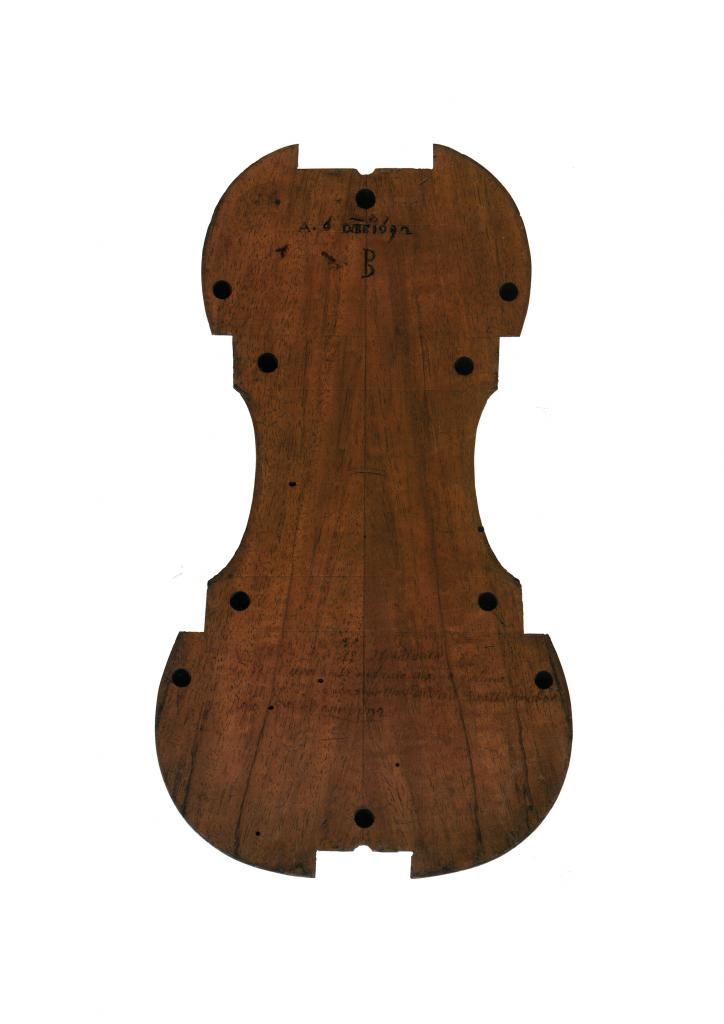
a ‘mould board’ from Stradivari
Internal mould
The building of a sound box using an internal mould had been common in lute making for a long time before the Cremonese luthier Andrea Amati applied the technique to violin making in the 16th century.
In Italy in the 17th century, the internal mould became established beyond Cremona as well. This technique would arrive later north of the Alps. Today, building on an internal mould is common in most ateliers worldwide.
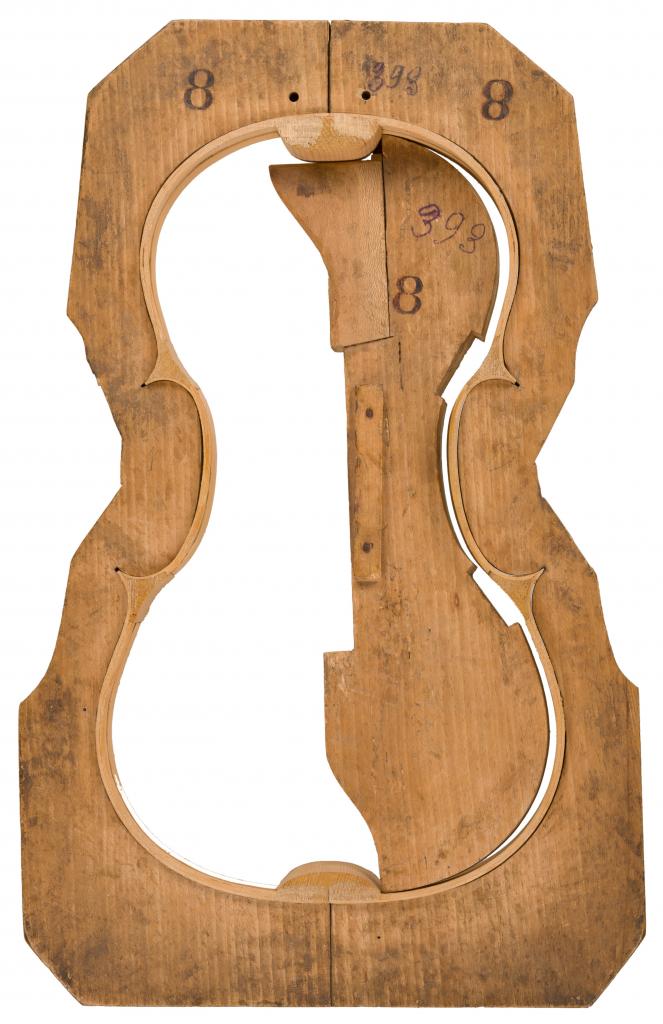
External mould
The practice of building violins using an external mould developed in France in the 19th century. When building using an external mould, the curved ribs are pressed against the mould and prepared blocks are glued to the fixed frames. The external mould is particularly suitable for the mass production of instruments.
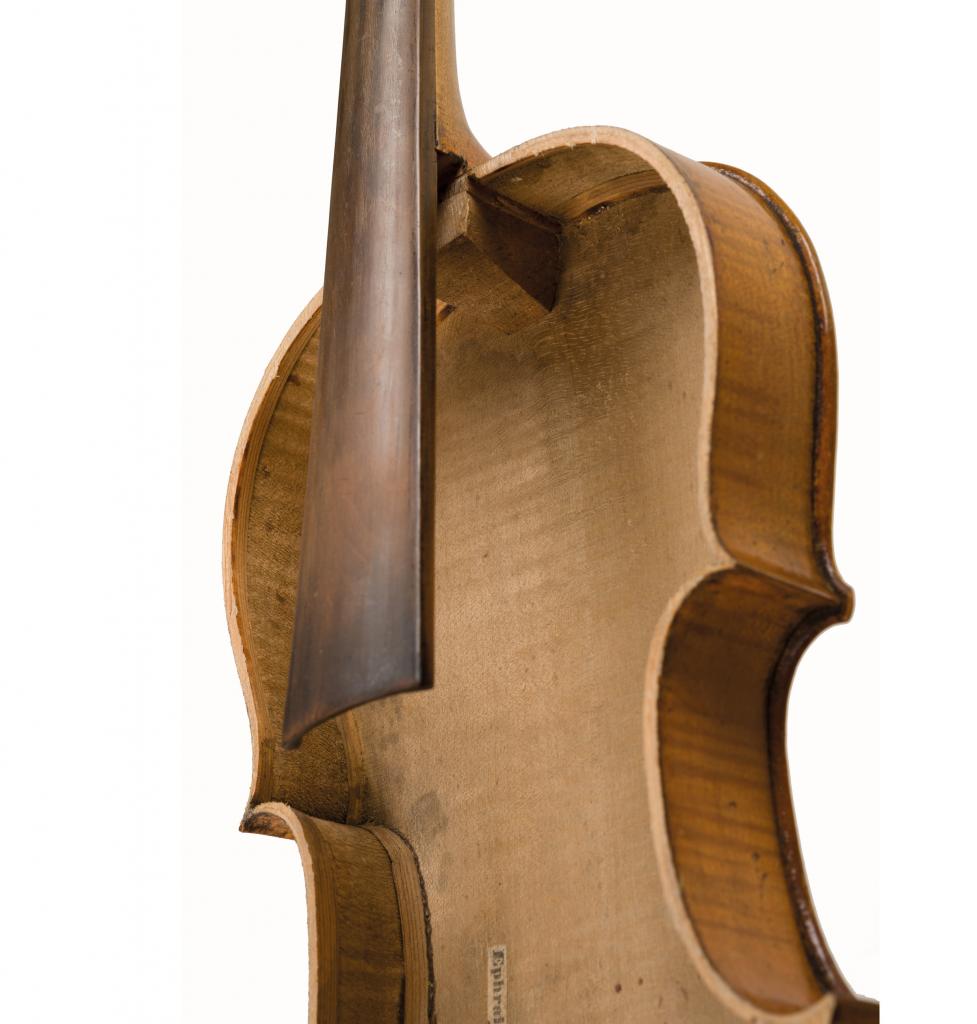
('on the back’, no corner blocks)
Building 'on the back'
Building violins ‘on the back’ is perhaps the most original of the widespread types of violin making. The curved ribs are glued onto the finished back with a reinforcing lining. Corner blocks are frequently dispensed with. The ribs are set into the extended neck root, which replaces the top blocks, or in some places into a groove in the back. North of the Alps, this technique was still used well into the 20th century, especially in the Vogtland region (in the east of Germany).