

Formulas for cooking varnishes and finishes were already known in antiquity. During the golden age of Italian violin making, countless treatises were written on how to prepare varnishes.
One particularly important source is the manuscript of Théodore Turquet de Mayerne (1573–1655), a physician, alchemist, and scholar from Geneva who later lived in London. His notes preserve many varnish recipes that were circulating at the time:
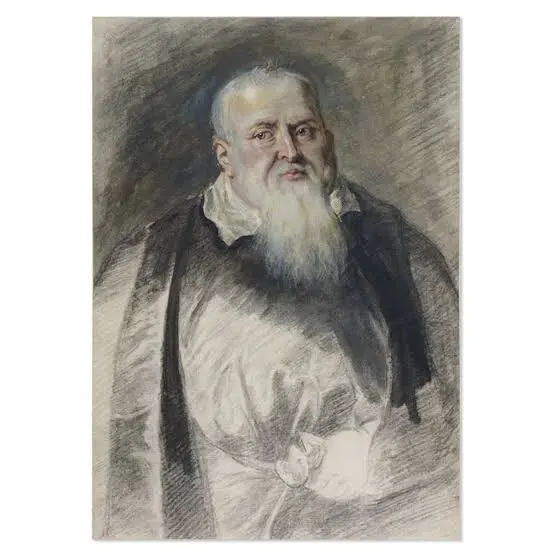
Born September 28, 1573 in Mayerne near Geneva – Died March 22, 1655 in Chelsea, London
“A beautiful and fine golden-yellow varnish
Take equal parts of linseed oil, yellow aloe, and pine resin, and boil them together as follows: Put the oil in a clean kettle and heat it until it begins to boil. Remove it from the fire and add the pine resin; return it to the fire until it boils again. Take it off once more and stir constantly with a spatula or stick. If the foam rises too high, hold a clean vessel over the kettle so the foam does not overflow. Then heat again until it boils, and once the resin has melted, add the finely powdered aloe while stirring. Place it back on the fire, but keep the heat gentle. Once a skin has formed, increase the heat without stirring, and let it stand until it thickens. When it has boiled well, leave it on the stove for another six to eight hours, as needed. The sign that it is ready is its beautiful color; while still warm, apply it to tin and you will see a splendid effect.”
(Source: Gudrun Bischoff, Das De Mayerne-Manuskript. Die Rezepte der Werkstoffe, Maltechniken und Gemälderestaurierung, Munich 2004, pp. 163f.)