

In 1882, the Parisian violin dealer Georges Chanot was accused of having pasted a label from the Cremonese violin maker Carlo Bergonzi onto an inferior violin. This was done with the aim of selling the instrument at a higher price. Chanot defended himself by saying that he had acted in a manner that was absolutely commonplace in the industry. The court, however, was not convinced.
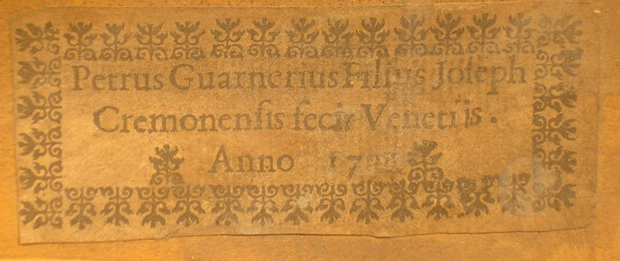
The label inside the instrument provides information about the maker, date and origin of the instrument. The label was regarded as a document for the instrument in question.
There are countless cases of dealers and violin makers falsely promoting inferior instruments by gluing in forged labels, or labels lifted from other instruments.
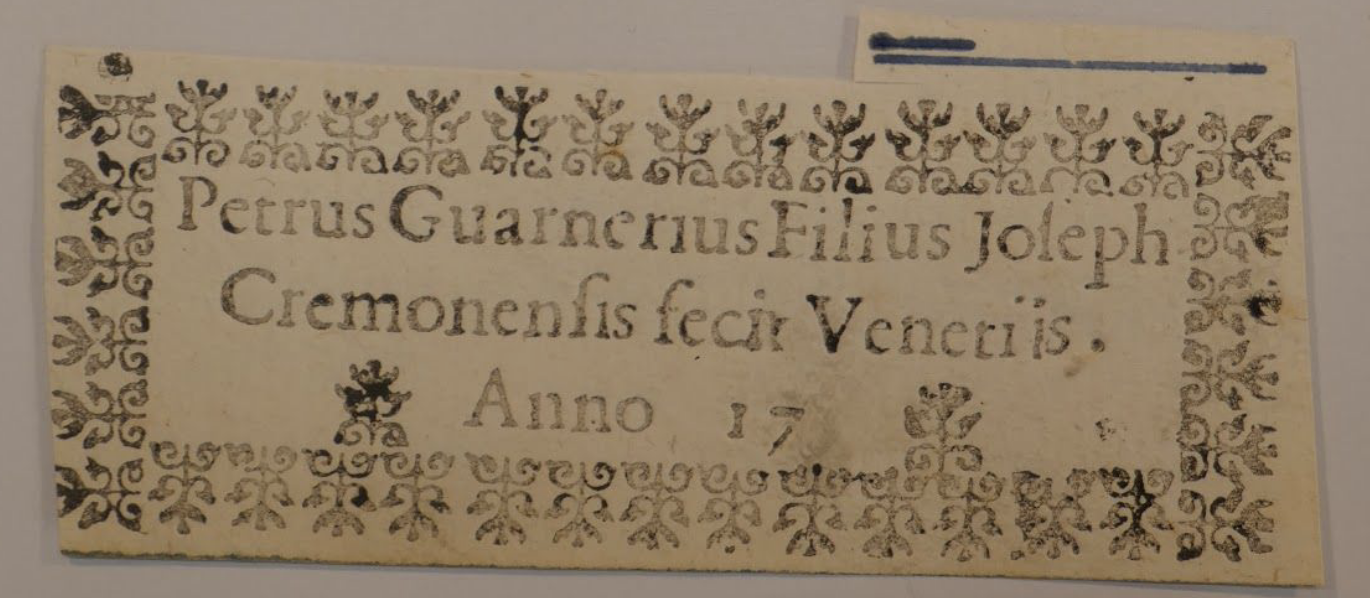
Original and forged labels can sometimes only be distinguished based on different printing techniques or paper properties. For example, paper produced after 1850 will exhibit fluorescence under UV light due to its wood content compared to older paper, which is primarily made of rags, i.e. textile fibres.
Original in all parts?!
Pieced together instruments
Another method of increasing the value of an instrument was to reassemble individual original components. For example, several instruments that could only partially be described as originals were used to construct an instrument that was offered as ‘original in all parts’.
Copies or forgery
In the borderline area of fraudulent intentions, the work of some copyists must also be considered. In the 19th century, the brothers William and Alfred Voller built masterful copies of old Italian models, which were sold as vintage Italian violins.