

A wide variety of wood types are used in violin making. In addition to spruce and maple, tropical woods are another traditional source for making accessories and bows.
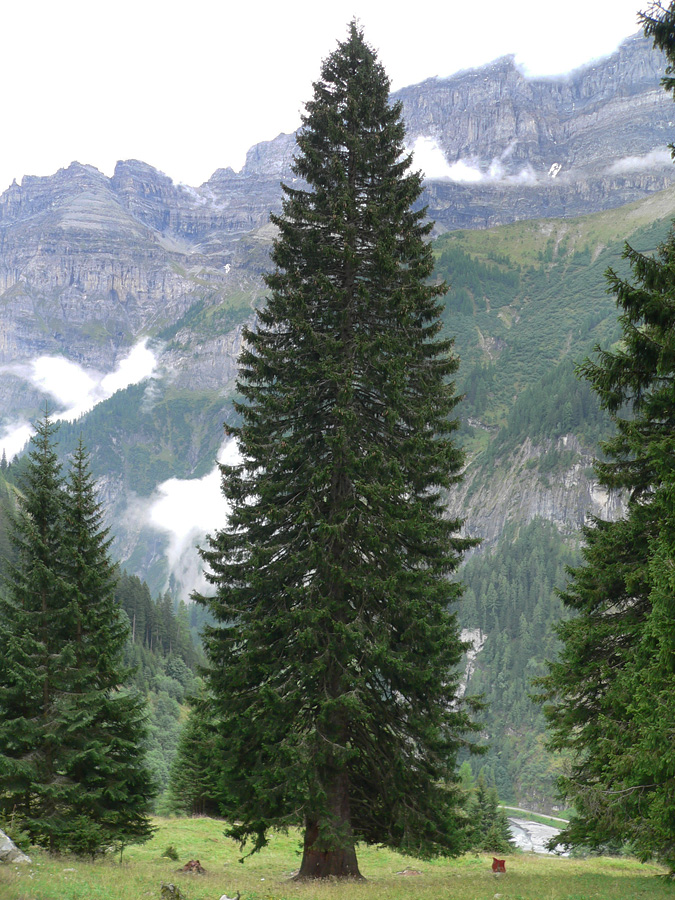
At 44%, spruce accounts for the largest share of all tree species in Switzerland’s wood supply. Spruce is a member of the Pinaceae family (pine family) and can live up to 500 years.
- Names: Common spruce or red spruce
- Number of species: there are about 50 different species of spruce
- Distribution: Europe, Asia and North America
- Growing height: 30 to 50 m.
- Needle characteristic: Evergreen
- Life span of needles: 5-7 years
- Bark characteristics: brown or red coloured, scaly
- Fruits: Cones, c. 10-15 cm
- Wood characteristics: Soft, light wood
- with great longitudinal bending strength.
- Root characteristics: Shallow roots
- Preferred habitat: Moist soil; up to 2,000 m altitude
- Latin name: Picea abies
Sycamore maple (acer pseudoplatanus)
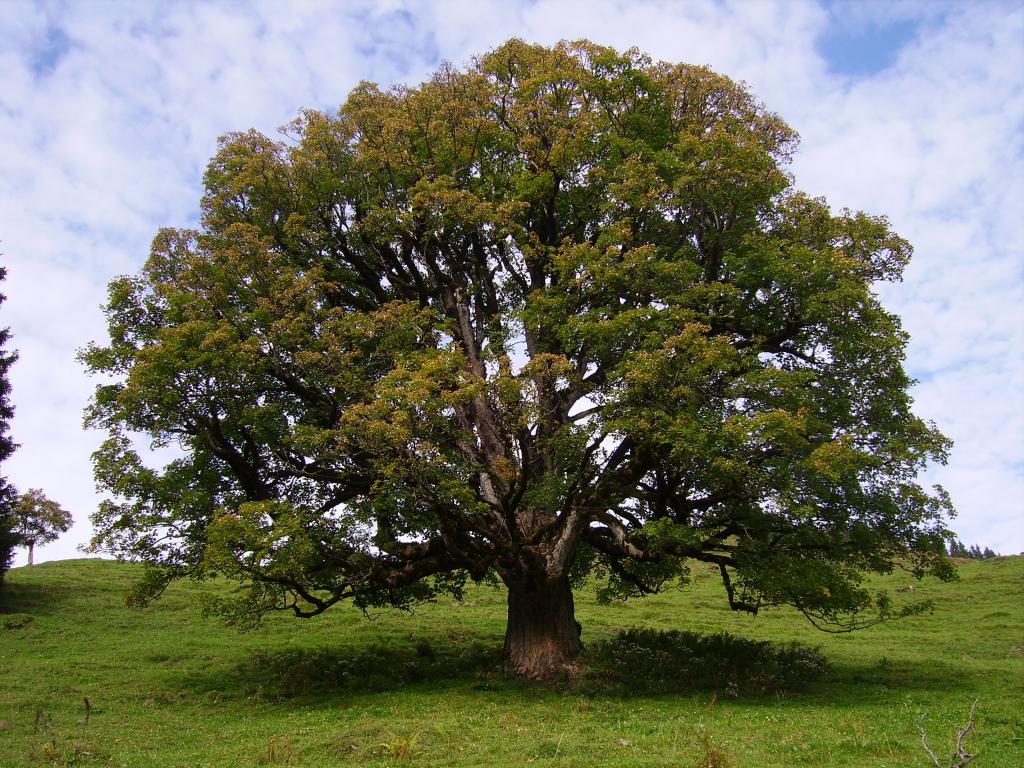
The sycamore maple is a member of the horse chestnut family and is especially prominent during autumn in woods and parks thanks to its wonderfully vibrant leaves. The Latin name is Acer pseudoplatanus.
- Name: Sycamore maple
- Latin name: Acer pseudoplatanus
- Distribution area: Throughout Central Europe
- Growing height: From 20 to 30 m high
- Leaf shape: Lobed
- Shape of leaf margin: Serrated
- Fruits: Small, winged nuts
- Characteristics of the bark: Flaky or scaly
- Root characteristics: Deep rooted
- Preferred habitat: Semi-shady to sunny
- Preferred soil: Loamy to sandy
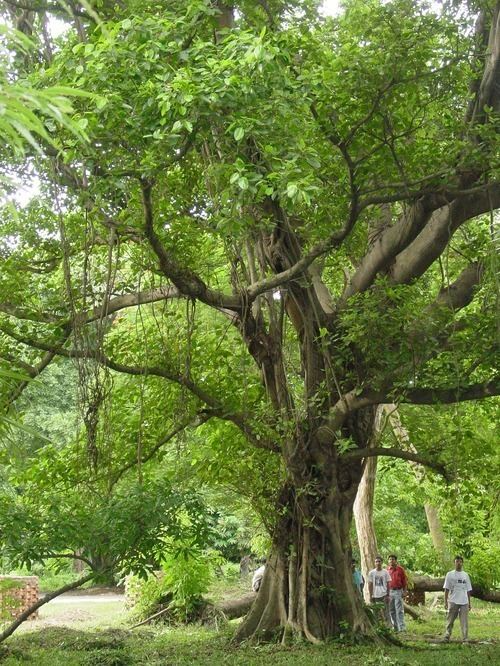
Persimmon, date plum or ebony (Diospyros) belongs to the Ebenaceae family. However, only the heartwood of the trunk has the typical black or black-brown colouring. There are about 300 species in the Ebenaceae family.
- Name: Ebony
- Range: Africa , East Indies, Indonesia, Philippines
- Latin name: Diospyros spp.
- Growing height: Up to max. 40 m depending on the species.
- Growth width: Up to 120 cm, depending on the species.
- Leaves: Elongated, finely pinnate and alternately arranged
- Bark: Brownish and smooth
- Sapwood: Beige-yellow to pink.
- Heartwood: Homogeneously black or brown-black striped; heavy and firm.
- Population: Of the 103 Diospyros species, about 30 are considered endangered or even threatened with extinction.
- Ebony from Madagascar may no longer be exported.
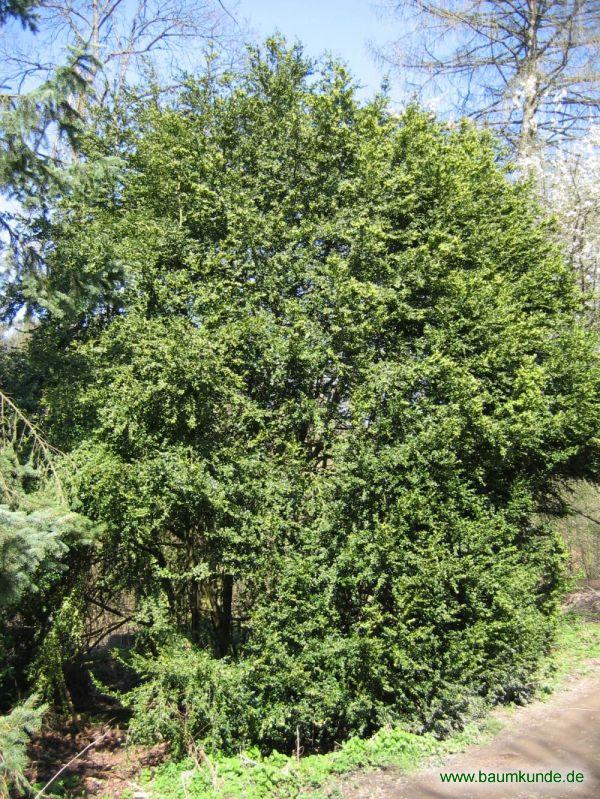
- Name: Boxwood
- Latin name: Buxus sempervirens
- Distribution area: Mainly southern Europe, but also India
- Growing height: 4 to max. 8 m tall shrubs
- Leaves: Elliptical, smooth-edged and arranged in opposite pairs
- Flowers: Small, yellowish-white flowers, arranged in axillary clusters.
- Bark: Green, later grey to ochre, bark shreds flake off with age.
- Wood: Beige, dense, heavy and fine-pored
- Preferred habitat: Semi-shady to sunny
Pernambuco (Paubrasil echinata)
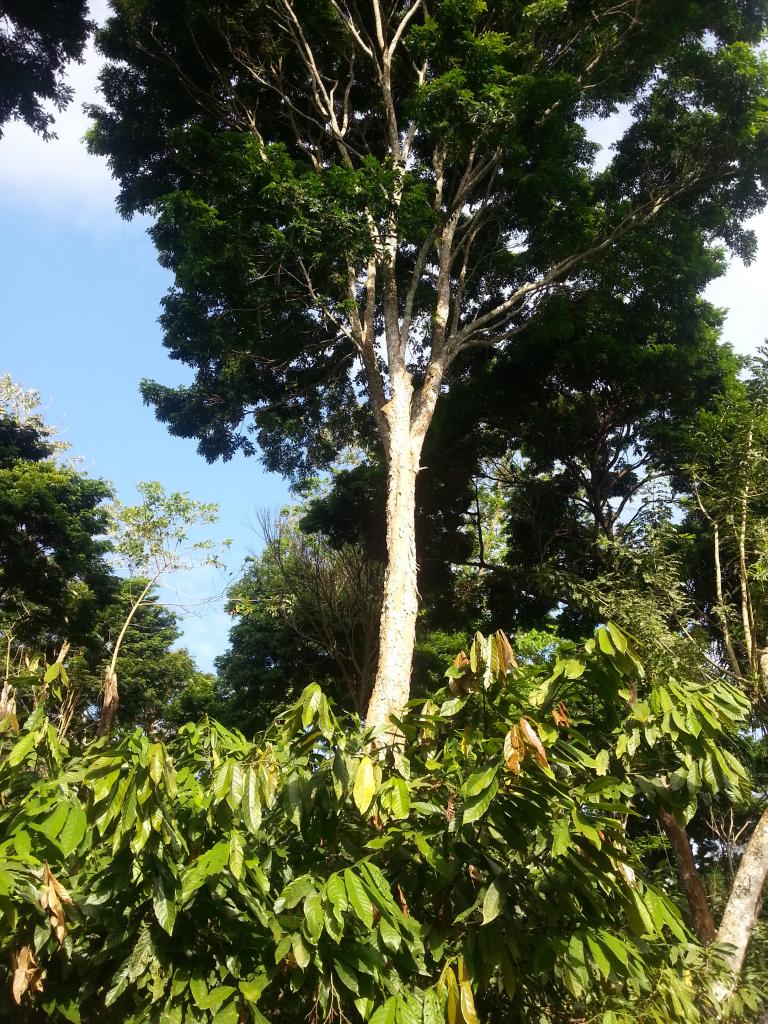
This tree, which occurs in the coastal region of Brazil, was long coveted as a dye plant because of the dye it contains, brasilin. Brazil is named after the ‘pau brasil' tree, translated as ‘glowing, (red) wood'.
- Common names: Pernambuco, pernambouc, brazilwood, redwood
- Botanical name: Paubrasil echinata
- Distribution: Brazilian coast
- Growing height: Up to 30 m
- Growth width: Up to 150 cm
- Leaves: Pinnate, oval and alternate
- Wood: Heartwood brown, red, orange (darkening strongly), without colour stripes. The sapwood is distinctly different in colour from the heartwood.
- Population: Due to centuries of deforestation, the populations are highly endangered. Trade in the wood is regulated.
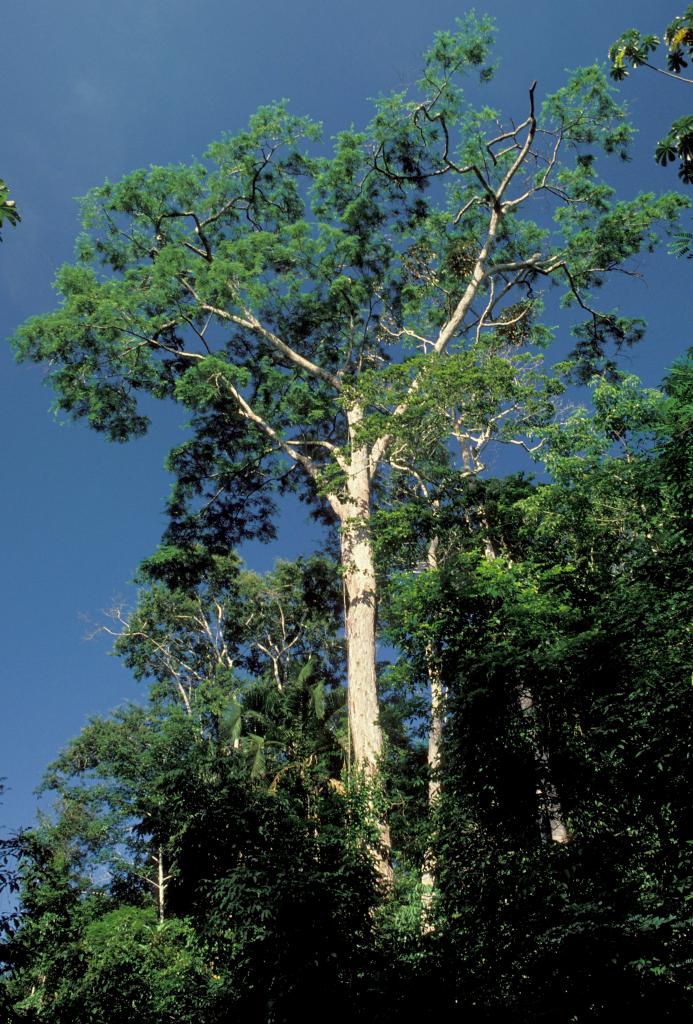
Rosewood is the trade name for various types of wood from trees in the Dalbergia genus (Dalbergia). Depending on the species, it has a brown-violet or black-striped colour. In guitar making, it is used to make the sound box, in violin making for individual colours.
- Common names: Rosewood, Brazilian rosewood, bahia rosewood
- Botanical name: Dalbergia spp.
- Best-known species: Bahia rosewood (Dalbergia nigra), Indian rosewood (Dalbergia latifolia), grenadilla (Dalbergia melanoxycon) and others.
- Distribution: Tropical forests in South America, India, Africa
- Growing height: Up to 30 m depending on species (Dalgergia nigra)
- Leaves: Pinnate, usually alternate
- Wood: Depending on species, brown-violet to black, striped
- Population: Due to centuries of deforestation, the populations are highly endangered. Trade in the wood, especially bahia rosewood, is heavily regulated.