

The ‘Alemannic School’ is the name given to the violin-making tradition that was prevalent in the Black Forest of southern Germany and the Swiss Espace Mittelland in the 17th and 18th centuries.
(Josef Meyer, around 1610), Image: bpk, A. Weisse
Records suggest that the violin makers of the 17th century were mainly carpenters, farmers or innkeepers. They fashioned instruments of the highest craftsmanship, skill and considerable effort.
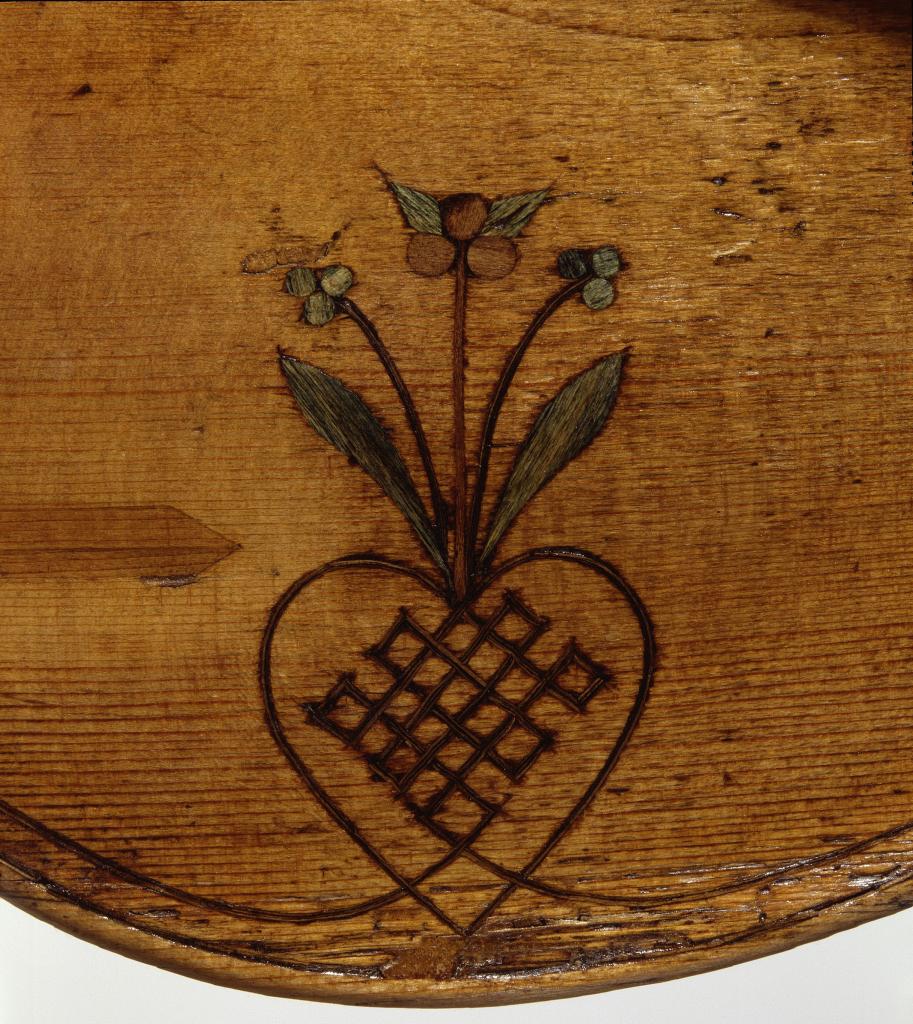
Richly decorated inlay work and strikingly long, unusual f-holes were characteristic of their work.
The instruments were not constructed using a mould, as was customary in the northern alpine region, but were freely built ‘on the back’.
⬈ DEMONSTRATION WORKSHOP / violin making / construction forms.
Adam Kirner and his stepson Josef Meyer were active in the Black Forest in the first half of the 17th century.
Franz Straub (Friedenweiler/GER), Konrad Stoppelt (Waldshut /GER and later Fribourg/CH) and Hans Krouchdaler of Bern are presumed to have been Josef Meyer’s pupils.
To all appearances, Hans Krouchdaler also trained pupils, including his son Ulrich, as well as Hans Ruod Schaffer, who worked in Lucerne. A communion table attributed to him suggests that Krouchdaler also worked as a carpenter.
Krouchdaler bought into the ‘Kilchöri’ with a decorated communion table:
‘In the completed annual account of the municipality of Oberbalm in 1677, Hans Krauchtaler auff der Lehmen was accepted and confirmed as a parish member. For his admission, he was to give the Honourable Treasurer of the Collegiate Church 1 doubloon, of which his Reverence made him a present of 5 batzes. But in lieu of the entrance fee, he made a fine rectangular table to be used in the church for the parish’. (Source: Oberbalm parish archives)
↘︎ Audio samples of instruments from the Alemannic School