

Dendrochronologie
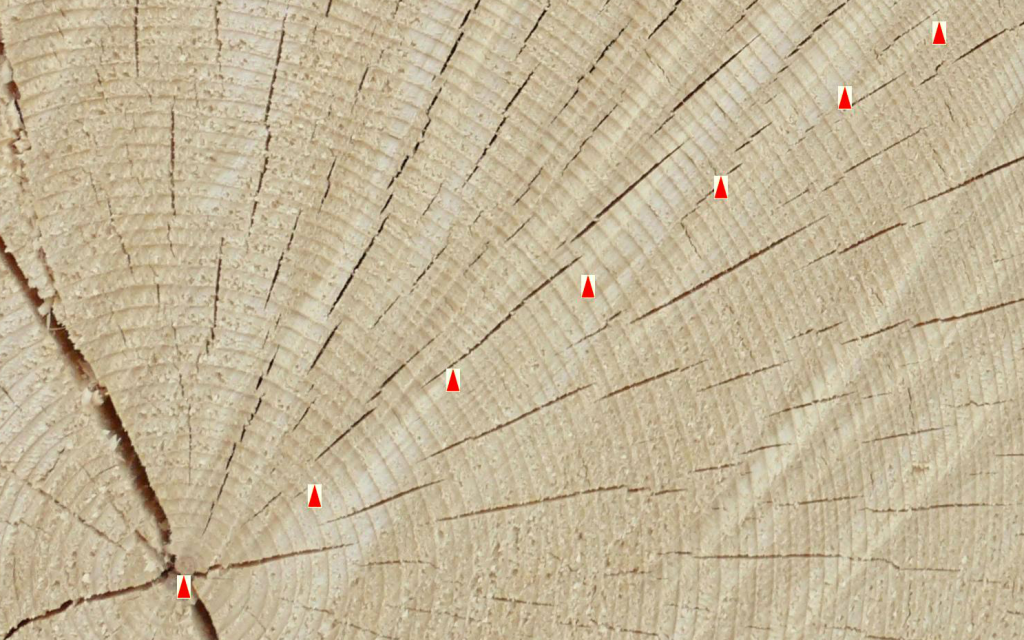
Dendrochronology is the science of determining the age and origin of wood samples. Dendrochronologists are able to determine the age of a piece of wood by measuring tree ring spacing.
Trees have wider annual rings in years with good growing conditions than in cold or drier years. All trees of a species that are exposed to similar living conditions in a certain area have approximately the same characteristic sequence of narrow and wide annual rings.
In the laboratory, tree ring widths are measured to an accuracy of 1/100 mm on cross-sections of wood samples. Reference values are collected in large databases. In this way, dendrochronologists can determine both the age and the approximate geographical origin of wood samples.
From cheese boxes to violins
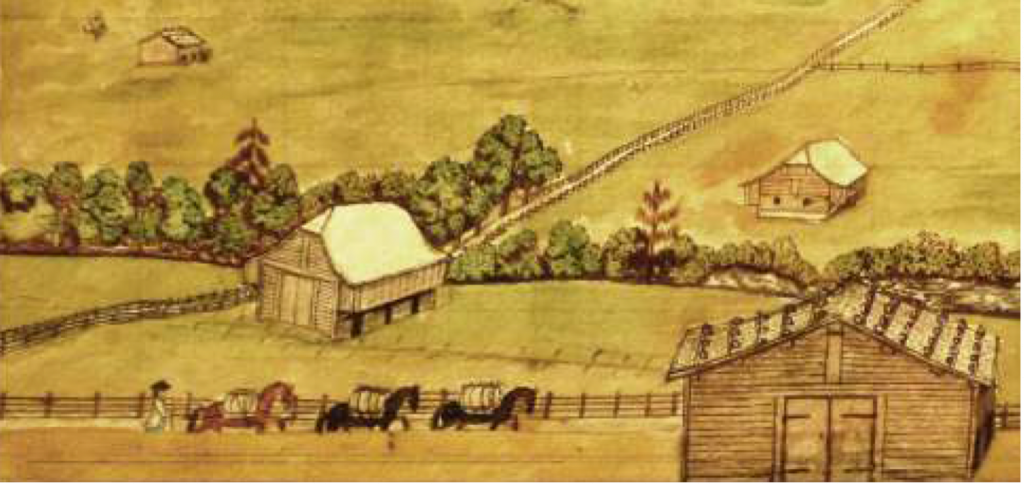
Around the turn of the millennium, an examination of a vintage English violin from 1797 revealed that its wood was very similar to wood that had been used in a historic alpine hut in the foothills of the Freiburg Alps. It turns out that the English violin’s top cover was most likely made with spruce wood from the Freiburg alpine foothills.
But how did the wood get to London?
The dendrochronologist Patrick Gassman, from Neuchâtel, proposed the following hypothesis for discussion:
the export of Gruyère cheese was documented as early as the 18th century. The cheese was transported to England in large wooden barrels made of spruce. It is conceivable that the wood in the barrels was repurposed by some London violin makers…
There are also reports from Parisian violin makers that spruce wood from the Swiss alpine foothills and the Jura region of France was in great demand. There is a story, for instance, of a journey to Switzerland by the Parisian violin maker J.B. Vuillaume, from which he returned with old church pews rather than freshly cut logs.