

Safien is a village consisting of several hamlets in the municipality of Safiental, Surselva region, in the Swiss canton of Grisons.
Violins were probably already being made and played in Safiental around 1700. Since the early 19th century, string music in Safien has been well-documented. In addition to copies of dance music, various string instruments have also been preserved.
The people of Safien usually made their own instruments. The craftsmen and farmers may have copied instruments from southern Germany as models.
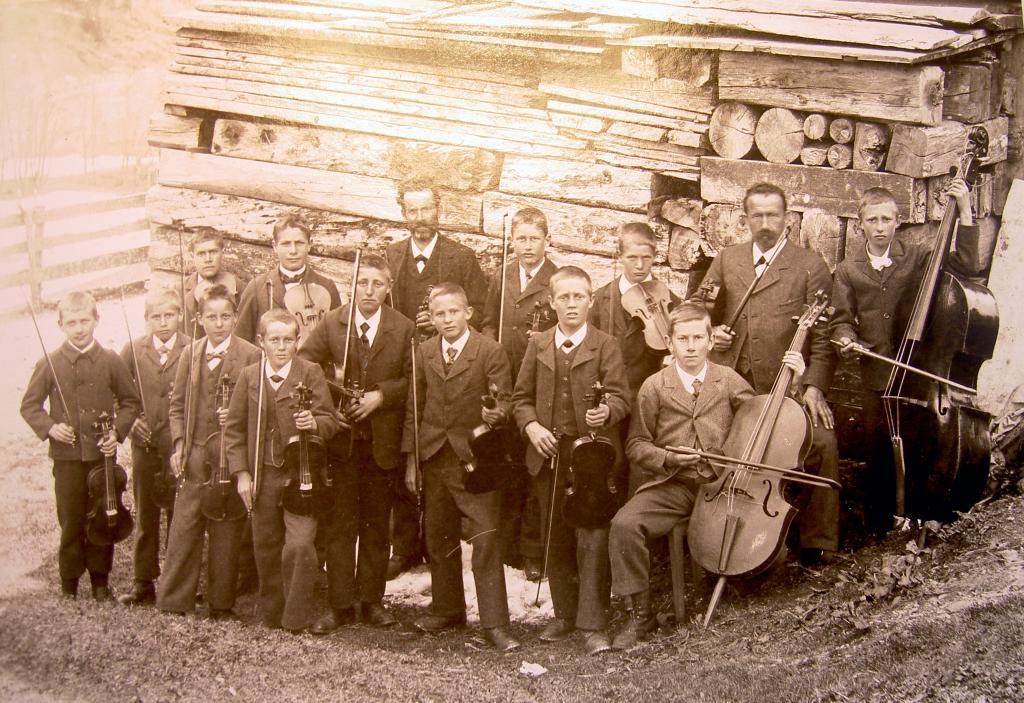
From the 19th century onwards, violin playing became widespread in Safiental in the ‘violin schools’.
In 1882, Christian Buchli, a village teacher in Neukirch and later in Camana, founded violin schools that ran for 55 years. The pupils had to walk long distances to attend lessons. They carried their instruments, which they often made themselves, in heavy wooden cases. In the heyday of the Safien violin school, 30 pupils learned to play the violin.
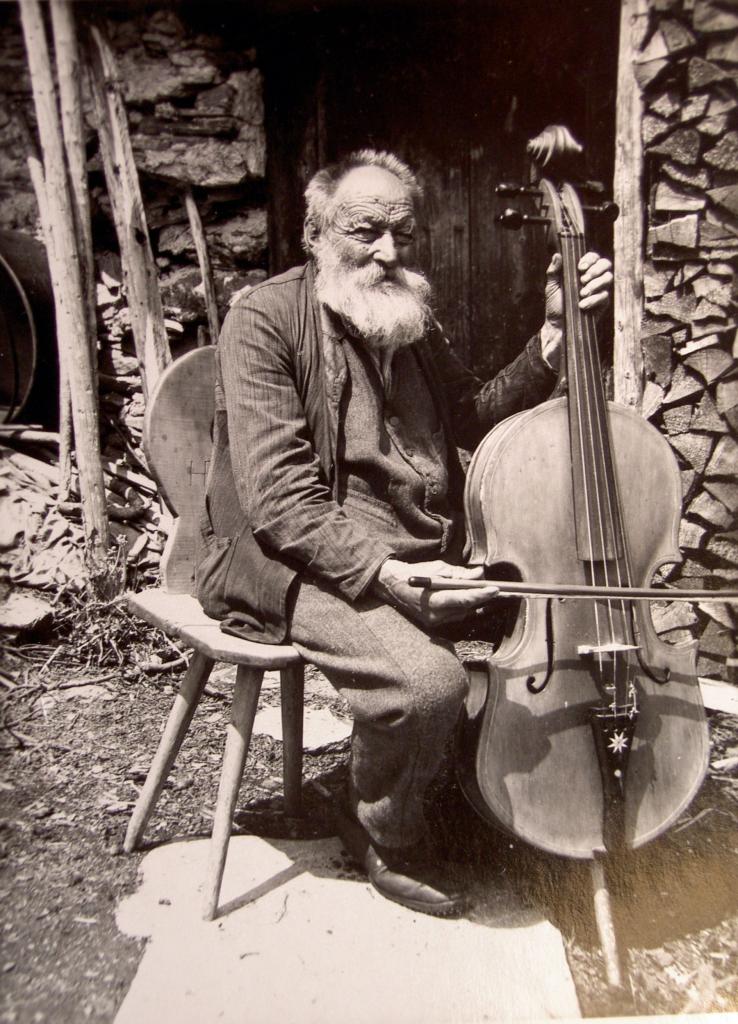
Safiental violin makers and -players
During the winter of 1909/10, Christian Stoffel built a cello without ever having been trained as a craftsman. This project made the rounds in Safien, because the general opinion was that Stoffel would do better to work on his firewood than to idle away the whole winter building an instrument.
But Stoffel refused to be discouraged. After struggling with the glue, he is known to have commented to a neighbour: ‘If it doesn’t hold this time, I’ll just smash the whole thing.’
(Source: Mattli Hunger; Safier Streichmusiken)
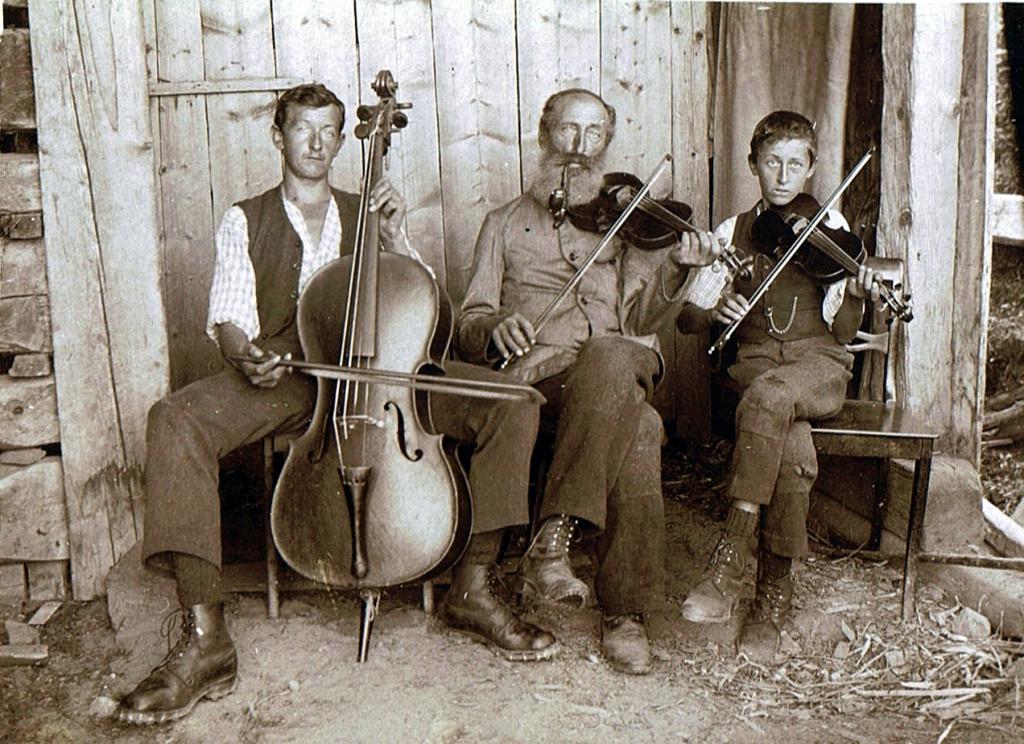
Image: Mattli Hunger Collection
Andreas Gredig, in the Bleikta (a hairpin turn above Neukirch), was known to be an accomplished violinist. At dances, he either played with comrades or his two sons.
Gredig was killed in an avalanche in 1923 while working as a trail maker. Source: Mattli Hunger; Safier Streichmusiken)